Three ordinances wait at Sheetal Niwas: what Article 114 lets the President do
The Press Council, Nepal Airlines and Gen Z commission ordinances remain under study as the government prepares more ahead of an infrastructure summit.
In this article
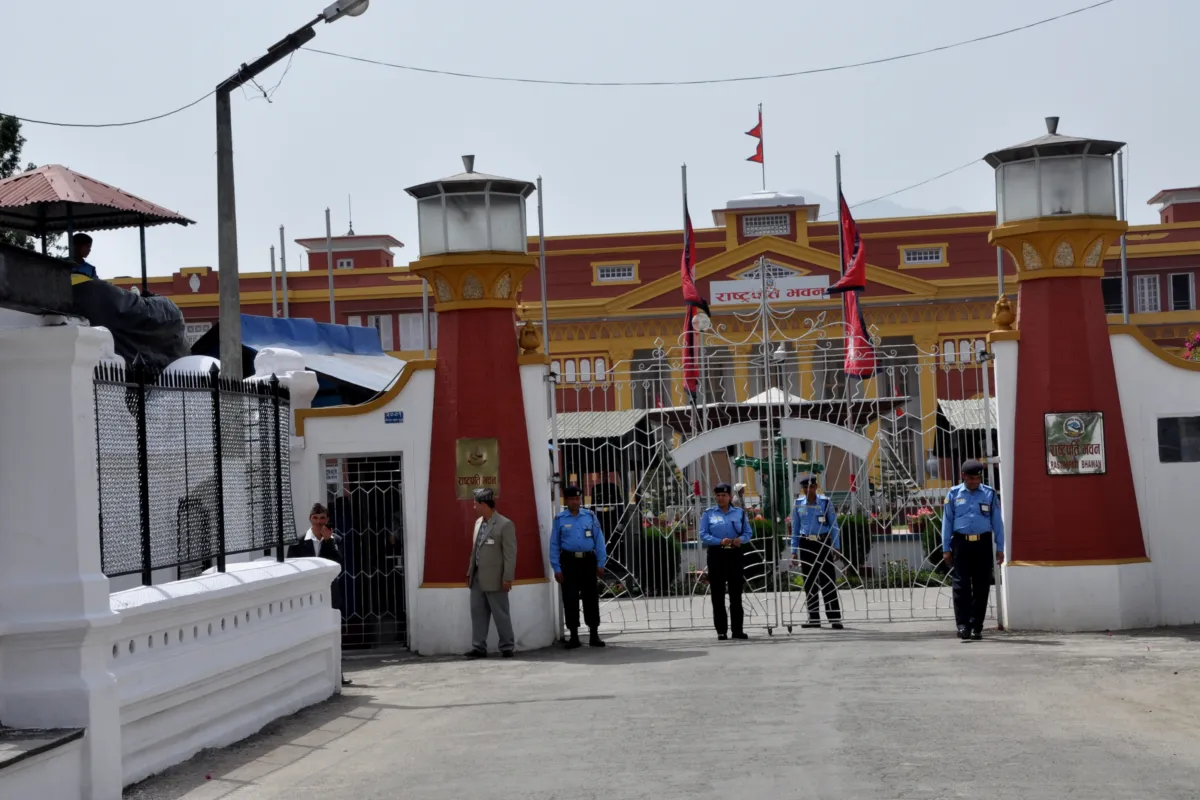
Three ordinances recommended by Prime Minister Balendra Shah’s government were still awaiting President Ramchandra Paudel’s decision at Sheetal Niwas on 24 November (8 Mangsir 2083 BS). Two of them, an amendment to the Press Council Nepal Act and a package amending several laws including the Nepal Airlines Corporation Act, have been there for nearly three weeks. The third, which would set up a commission on the Gen Z movement of September 2025, arrived at the weekend. The President’s Office says all three are “under study”.
At the same time, ministers say more ordinances are coming, including one amending about 59 laws, before the Nepal Infrastructure Summit on 9–10 December. The delay has revived a question the Constitution does not answer in plain words: how long can a President take over an ordinance the Cabinet has asked him to issue?
Background
The Cabinet decided on the Press Council and multi-Act ordinances on 3 November (17 Kartik). Nyayapalika reported at the time that the Press Council amendment would bring journalism on social media and digital platforms, including by influencers and content creators, under the Council’s code of ethics. The Kathmandu Post, citing sources at Sheetal Niwas, says both ordinances reached the President’s Office on 6 November.
According to the Post, the second ordinance would amend Section 12 of the Nepal Airlines Corporation Act, 1962, to add the post of executive chair and allow temporary appointments when a post is wholly vacant. The Supreme Court had annulled the appointment of the airline’s executive chair on 20 August because he was over the 65-year age limit.
The Cabinet recommended the third ordinance, which the Post names as the Gen Z Movement Incidents Investigation, Compensation and Reparation Commission Ordinance, 2026, on 20 November (4 Mangsir). Onlinekhabar reports that it reached the President’s Office on Sunday 22 November; Ratopati says it was registered on Monday. According to Onlinekhabar, the commission would further investigate cases arising from the movement, foster reconciliation between victims and other parties, compensate those who suffered losses and provide a basis to settle cases other than serious crimes quickly. Its text, membership and powers have not been published. A government panel had earlier found only about 300 accused eligible for case withdrawal.
Not every ordinance has stalled. Since Parliament’s budget session ended on 2 October, the government has recommended eight ordinances and the President has issued five, according to Ratopati and the Post, among them the land and forest ordinances and a disaster ordinance.
What the Constitution says
Article 114: when an ordinance can be made
Article 114(1), in the Nepal Law Commission’s English translation, allows the President, “on recommendation of the Council of Ministers”, to promulgate an ordinance “at any time, except when both Houses of the Federal Parliament are in session”, if “circumstances exist which render it necessary to take immediate action”. Under clause (2) an ordinance has the same force as an Act.
Three limits follow. An ordinance must be tabled in both Houses at their next session and ceases to be effective if both Houses do not adopt it. The President may repeal it at any time. Otherwise it lapses automatically 60 days after the day both Houses meet; if they meet on different dates, the clock runs from the later date.
Is Parliament in session?
No. The President prorogued the budget session from midnight on 2 October (16 Asoj), so neither House is sitting and the constitutional condition for issuing ordinances is met. Article 93 requires that no more than six months pass between two sessions. The Post reports that Speaker DP Aryal has consulted the Prime Minister and Law Minister, and quotes him as saying, “The plan is to convene the parliamentary session immediately afterwards”, meaning after the summit-related ordinances. Nepali Congress leader Bishma Raj Angdembe told the paper the Speaker had earlier indicated a start on 1 or 2 December.
Article 66 and the President’s discretion
Article 66(2) says the President performs his functions “on recommendation and with the consent of the Council of Ministers”, submitted through the Prime Minister, except where the Constitution assigns a recommendation to another body.
The Constitution treats Bills differently. Under Article 113, the President must authenticate a Bill within 15 days and may send a non-money Bill back once for reconsideration. Article 114 sets no deadline and makes no provision for returning an ordinance.
What has happened before
Mr Paudel has delayed ordinances before. In January 2025 he issued four ordinances recommended by the KP Sharma Oli government on 13 January but held a land, forest and national parks ordinance for further study, his press adviser Kiran Pokharel said at the time. He issued it on 15 January after Mr Oli committed to revising it through Parliament, according to The Himalayan Times.
In May 2026 he returned the Shah government’s Constitutional Council ordinance for reconsideration, Kantipur reported, after objecting to its quorum rules. The Cabinet resent it unchanged and he authenticated it on 5 May. His legal adviser, senior advocate Baburam Kunwar, told the Post that “in his capacity as the custodian of the constitution, the President decided to authenticate it.”
The Supreme Court has not settled the President’s side of the question. In July 2025 a divided Constitutional Bench upheld appointments made under an earlier Constitutional Council ordinance; two justices said the executive has discretion to issue ordinances. Senior advocate Raju Prasad Chapagain told the Post the court had not answered whether that ordinance fell within the executive’s limited authority.
The legal questions now
The President has not commented publicly. Sources close to him told the Post he believes press freedom and routine executive appointments should be settled through regular legislation by Parliament. Federation of Nepali Journalists president Nirmala Sharma, whose delegation met him in early November, said he told them he would consult constitutional experts.
The government rejects talk of a rift. Law Minister Sobita Gautam told the Post that holidays may have left too few working days and that “the President is likely studying them.” Mr Kunwar said: “We will examine them within a day or two, after which we will know the exact details.” Senior advocate Chandra Kanta Gyawali told the paper the President cannot hold ordinances indefinitely and that “it is not for the President to stop it.”
Two issues stand out. First, Article 114 requires circumstances that make “immediate action” necessary. Onlinekhabar notes that the government has not explained the urgency of the three pending ordinances, and the Post reports officials as saying regular Nepal Airlines recruitment can now resume because the election code of conduct no longer blocks it. Second, the recent precedent suggests a return-and-resend cycle rather than a refusal: when the Cabinet insisted in May, the President signed.
More ordinances on the way
Kantipur reported on 24 November that Infrastructure Development Minister Sunil Lamsal’s ministry is drafting three more ordinances: a Nepal Laws (Amendment) ordinance covering about 59 laws on infrastructure and investment; an ordinance creating a National Development Authority under the Prime Minister to approve foreign and domestic investment projects; and a construction materials ordinance on stone, gravel, sand and timber. Mr Lamsal said they would be recommended “within a few days”. Finance Minister Swarnim Wagle has also spoken of amending 59 Acts. None of these has yet been recommended to the President.
Ms Gautam told the Post that only ordinances essential to the summit would be introduced. Mr Angdembe said, “The government should not be talking about ordinances when it is time to convene Parliament.”
What it means and what happens next
For journalists, content creators, people facing Gen Z protest cases and investors, the content of these ordinances matters directly. The President may issue them, keep studying them or send them back. Whatever he issues must go before both Houses once Parliament meets, and will lapse 60 days later unless adopted. According to the Post, four of the government’s April–May ordinances lapsed in exactly that way.
Frequently asked questions
What does Article 114 of Nepal’s Constitution say?
It lets the President issue an ordinance on the Council of Ministers’ recommendation when both Houses are not in session and immediate action is needed. The ordinance has the force of an Act but must be tabled in Parliament and lapses 60 days after both Houses meet unless adopted.
Can the President refuse an ordinance?
Article 66 requires the President to act on the Cabinet’s recommendation, and Article 114 gives no power to reject. It also sets no deadline, and President Paudel has delayed and once returned ordinances, but in each reported case he later issued them.
Which ordinances are pending with the President?
As of 24 November: an amendment to the Press Council Nepal Act, an amendment to several laws including the Nepal Airlines Corporation Act, and an ordinance on a Gen Z movement investigation, compensation and reparation commission.
Is Parliament in session now?
No. The budget session was prorogued from 2 October, and no date for the winter session has been officially announced.
What other ordinances are planned?
Ministers say they are drafting a Nepal Laws (Amendment) ordinance covering about 59 laws, a National Development Authority ordinance and a construction materials ordinance before the 9–10 December infrastructure summit. None has been recommended yet.
Sources
Primary sources
- The Constitution of Nepal (English translation), Articles 66, 93, 113 and 114 — Nepal Law Commission
Other reporting
- Delayed ordinances signal a rift between Nepal president and prime minister — The Kathmandu Post, 24 November 2026
- Government plans more ordinances before convening Parliament — The Kathmandu Post, 24 November 2026
- Three ordinances pending at President’s Office — Onlinekhabar English, 24 November 2026
- Gen Z commission ordinance sent to the President’s Office (Nepali) — Onlinekhabar, 23 November 2026
- President studying three ordinances recommended by the government — Ratopati, 24 November 2026
- Government bringing three ordinances targeting the Nepal Infrastructure Summit (Nepali) — Kantipur, 24 November 2026
- Balendra Shah administration goes fast with ordinances — The Kathmandu Post, 15 November 2026
- President issues held ordinance, Parliament to convene on May 11 — The Kathmandu Post, 6 May 2026
- President decides to send back Constitutional Council ordinance (Nepali) — Kantipur, 3 May 2026
- Court nod to Oli’s appointments leaves executive unchecked — The Kathmandu Post, 4 July 2025
- President cites sensitive issues to halt ordinance related to land, forests and national parks — The Kathmandu Post, 15 January 2025
- President Paudel issues land-related ordinance — The Himalayan Times, 16 January 2025