Strasbourg court finds Türkiye’s years-long single-cell detention of a judge and a prosecutor degrading
The European Court of Human Rights held that holding a former Court of Cassation judge in a single cell for six years and eight months, and a former prosecutor for about seventeen months, without individual reassessment breached Article 3. It found no violation for two other applicants.
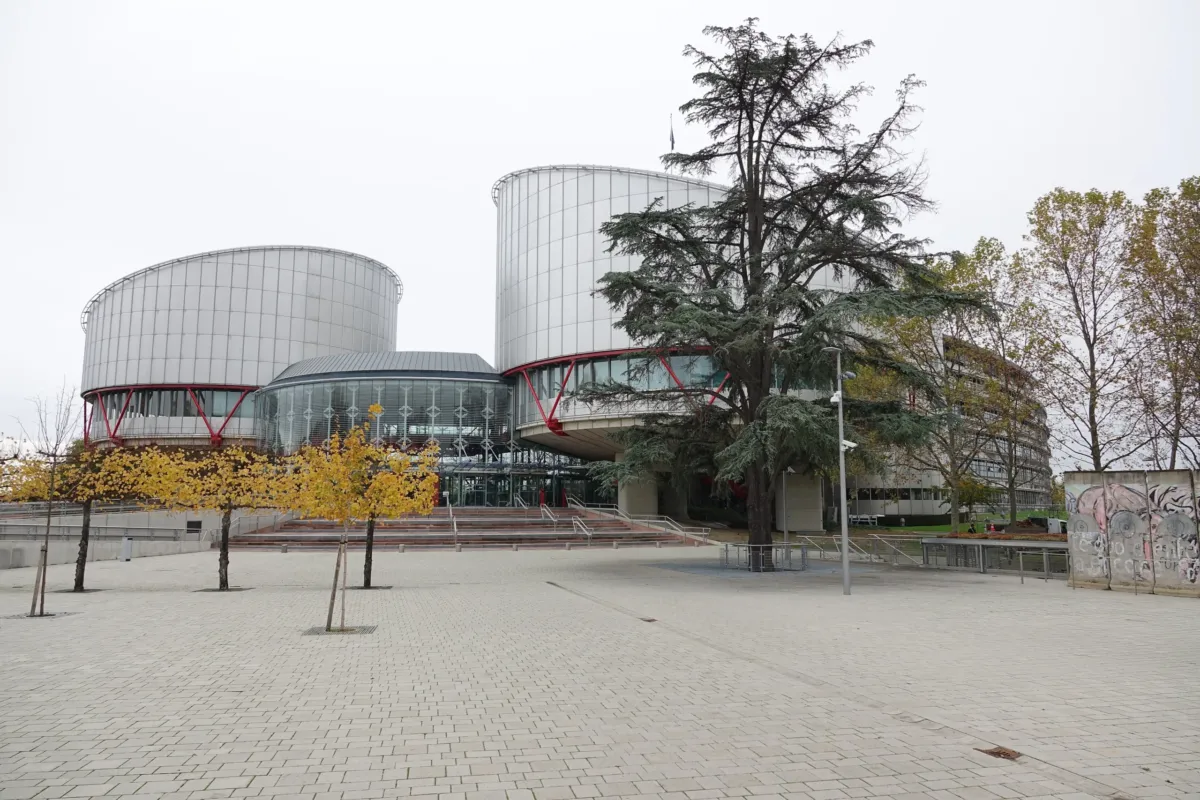
The European Court of Human Rights ruled on 3 November 2026 (17 Kartik 2083 BS) that Türkiye subjected a former judge and a former public prosecutor to degrading treatment by holding them in single cells, with their contact with other prisoners restricted, for long periods while they awaited trial. In Gökçe and Others v. Türkiye, a Chamber of the Court’s Second Section found a violation of Article 3 of the European Convention on Human Rights, which prohibits torture and inhuman or degrading treatment.
The judgment joined four applications. The Court unanimously found a violation in respect of Süleyman Kul, formerly a judge at the Court of Cassation, and İlhan Akıllı, formerly a public prosecutor in Eskişehir. It found no violation in respect of Musa Gökçe, a former official of the Banking Regulation and Supervision Agency (unanimously), or Eşref Köse, a former prosecutor in Samsun (by six votes to one). Türkiye was ordered to pay EUR 7,000 to Kul and EUR 3,000 to Akıllı in non-pecuniary damages, and EUR 1,500 to each for costs and expenses.
Background
All four applicants held public office when they were arrested in 2016, after the failed coup attempt of July that year, and placed in pre-trial detention on charges of membership of an armed organisation the Turkish authorities call the “Fetullahist Terror Organisation/Parallel State Structure” (FETÖ/PDY). They were first held in shared cells. Prison boards later moved them to single cells by administrative decision, not as a disciplinary sanction, citing security and the nature of the charges.
Kul was held alone in a single cell from October 2016 until his release on probation in June 2023, about six years and eight months. For roughly the first 19 months he had no contact with other prisoners and took outdoor exercise alone for one hour a day; from May 2018 he could spend two hours a day outdoors with two other prisoners. Akıllı was held in single cells from September 2016 until his release in February 2018, about one year and five months; for the first eight months he had no contact with other prisoners and 30 minutes of outdoor exercise a day. Türkiye’s Constitutional Court had rejected both men’s complaints as manifestly ill-founded.
What the Court said
The Court accepted that, given the terrorism-related charges and the security situation after the coup attempt, some restriction on contact between detainees could be justified, but said substantive reasons are required when protracted isolation is extended. In Kul’s case the reasons were “generic in character”, ignored his individual conduct, and were never reassessed.
For Kul, the Court weighed together the “very considerable” duration of the regime, hourly night-time checks that disrupted his sleep, the demonstrated effect on his mental health, and the absence of any review. For Akıllı, it relied on the eight months without contact with other prisoners, the 30-minute exercise limit, the lack of any social, sports or educational activities, and reasons that were “abstract” and not individualised. In both cases the hardship exceeded the unavoidable level inherent in detention.
Gökçe spent three hours a day outdoors with two other prisoners and kept his visits, calls and access to books, so the Court held he retained “sufficiently meaningful human contact”. The majority took a similar view of Köse, who had 90 minutes a day with at least one other prisoner. Judge Oddný Mjöll Arnardóttir dissented on Köse, finding that his isolation of two years and eleven months, without individualised reassessment, had become punitive.
International standards
The judgment cites the UN Standard Minimum Rules for the Treatment of Prisoners (the Nelson Mandela Rules). Rule 44 defines solitary confinement as confinement for 22 hours or more a day without meaningful human contact, and prolonged solitary confinement as such confinement for more than 15 consecutive days. Rule 45 reserves it for exceptional cases, as a last resort, for as short a time as possible and subject to independent review.
Article 22 of the Constitution of Nepal similarly prohibits physical or mental torture and cruel, inhuman or degrading treatment of anyone arrested or detained, and entitles victims to compensation under law. Strasbourg judgments do not bind Nepal, but the ruling offers a comparative reference on how long and how strict restrictions on detainees may be.
What happens next
This is a Chamber judgment; it becomes final in the circumstances set out in Article 44 § 2 of the Convention. Türkiye must pay the awards within three months of the judgment becoming final, with interest for late payment. Nyayapalika found no public response from the Turkish government or the applicants.
Sources
Based on the full English text of the judgment and the Registry’s press release. The charges against the applicants are those brought by the Turkish authorities; the Court ruled only on the conditions of detention, not on the charges.
Primary sources
- Case of Gökçe and Others v. Türkiye (nos. 51110/19, 34526/20, 48100/20 and 34616/21), judgment — European Court of Human Rights, 3 Nov 2026
- Press release ECHR 272 (2026): Judgments of 3 November 2026 — Registry of the European Court of Human Rights, 3 Nov 2026