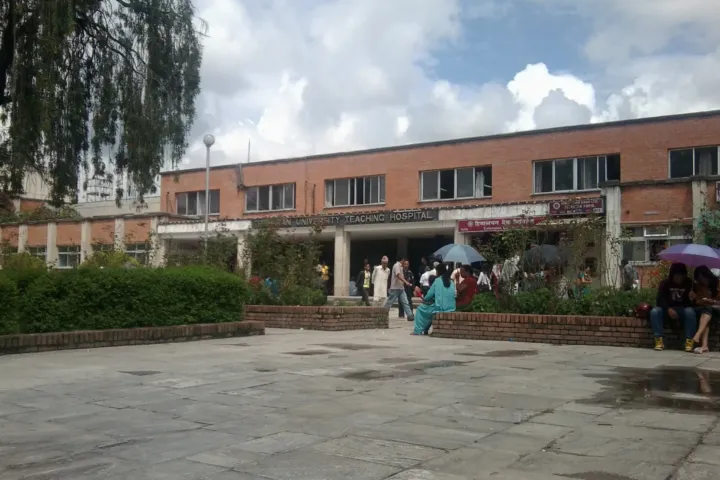
Nepal Law Campus: seven decades of training the country’s judges and lawyers
Founded in 1954 as Nepal Law College, Tribhuvan University’s law campus on Exhibition Road has shaped generations of Nepal’s legal profession. It now faces pressure to modernise.
In this article
Few institutions are as closely tied to Nepal’s judicial and constitutional history as Nepal Law Campus. Over more than seven decades it has done more than teach law: it has trained the generations of lawyers, judges and scholars who have shaped the country’s justice system, its democratic practice and its constitutional development.
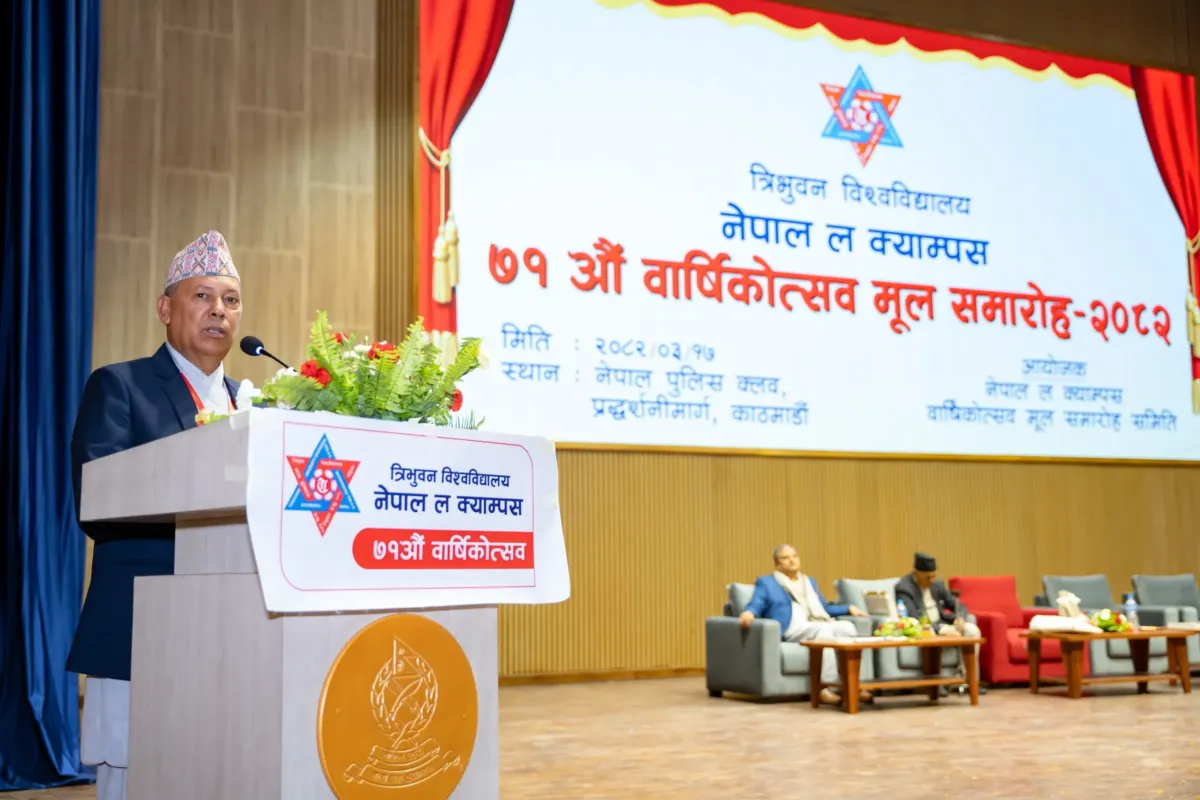
The campus was established on 1 July 1954 (17 Asar 2011 BS) as Nepal Law College, according to its own account. Today it is a constituent campus of Tribhuvan University and stands on Pradarshani Marg (Exhibition Road) in central Kathmandu. It is widely regarded as the institution that laid the foundations of formal legal education in Nepal.
A history bound up with the state
Founded when legal education in Nepal was at an early stage, the college helped establish law as a structured academic discipline. Its graduates have gone on to the judiciary, the civil service, private practice, academia, politics and public policy.
Nepal’s legal system has been through repeated upheaval since then: the restoration of multiparty democracy, the political transition after the Maoist conflict, the Constituent Assembly and the practice of constitutionalism under the new Constitution. People educated at the campus have been involved in studying, analysing and working through each of these changes.
A source of judges and lawyers
The campus’s main legacy is its graduates. Its alumni include judges at every level up to the Supreme Court, senior advocates, government attorneys, practising lawyers, constitutional and legal experts, and university teachers. It has also been a forum for debate on the Constitution, fundamental rights, human rights, judicial review, the rule of law and law reform.
Teaching and debate
Students study statutes, precedents and legal principles alongside their practical application. Court judgments, constitutional provisions, the legislative process and the jurisdiction of state bodies are central to the curriculum, and students take part in moot courts, research, seminars and other activities outside the classroom. The campus currently offers the B.A. LL.B., the LL.B. and LL.M. programmes in day and morning formats.
Challenges ahead
Its long history does not shield the campus from present pressures: growing competition in legal education, technological change, international legal practice, and the need for more research-oriented teaching and professional skills. Bringing traditional legal education in line with current needs would mean updating the curriculum, providing adequate resources, prioritising research and practical training, and exposing students to technology and international practice.
New fields — artificial intelligence, cyber law, intellectual property, international trade law, environmental justice and digital rights — are widening the scope of legal education. Building them into teaching and research is one way the campus could connect its historical standing with the needs of the coming decades.
Looking forward
An institution’s reputation rests not only on its past but on the people it prepares for the future. A capable, independent and accountable justice system needs lawyers who understand the Constitution, protect citizens’ rights and can hold the state within legal limits. Whether Nepal Law Campus can link its legacy to quality teaching, research and practical training will matter for the direction of the country’s justice system.
Sources
Primary sources
- About us — Nepal Law Campus, Tribhuvan University